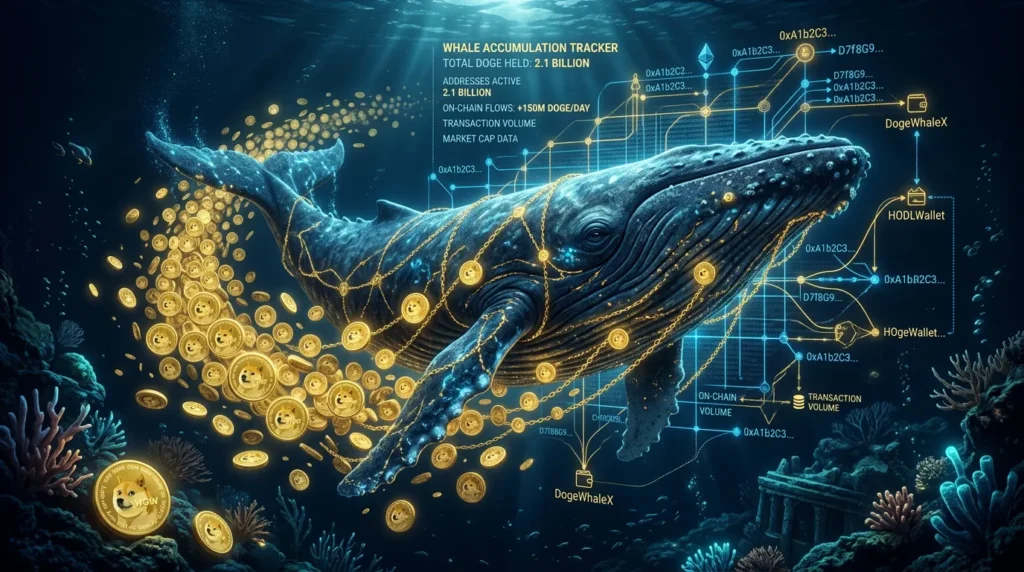
March 2026 is shaping up to be one of the most consequential months in Dogecoin’s history. In the span of just a few weeks, three major developments have converged around DOGE: the first spot Dogecoin ETF began trading on the Nasdaq, Elon Musk confirmed the April launch of his X Money payments platform, and the House of Doge — the official corporate arm of the Dogecoin Foundation — continues its push to deliver the Such payments app to everyday users. Together, these catalysts represent the broadest institutional and commercial attention Dogecoin has received in years. Yet the market picture remains complex, with DOGE navigating persistent headwinds and a community watching closely to see which narrative takes hold.
This article is for informational purposes only and does not constitute financial advice.
Elon Musk Confirms X Money April Launch — But DOGE Is Not Yet in the Picture

On March 10, 2026, Elon Musk confirmed via a post on X that his financial platform, X Money, will enter early public access in April 2026. The announcement immediately sent Dogecoin’s market value surging by more than 8% within 24 hours — one of the sharpest single-day gains for DOGE in recent months — as traders and retail investors rushed in on speculation that the platform would integrate Dogecoin as a native payment method.
The enthusiasm, however, quickly ran into a dose of reality. According to current reports and beta testing observations, the initial version of X Money will focus exclusively on fiat currency transactions: peer-to-peer transfers, direct deposits, yield-bearing balances, and debit card functionality — positioning it as a direct competitor to established payment apps like Venmo and Cash App. There is no confirmed crypto wallet feature, and no Dogecoin integration has been announced for the launch version.
X has already secured more than 40 money transmitter licenses across U.S. states, signaling a deliberately compliance-first approach to building out its financial infrastructure. Industry analysts suggest this regulatory groundwork may be a prerequisite before introducing any cryptocurrency capabilities — a sequence that prioritizes regulatory legitimacy over headline-grabbing crypto features.
The DOGE-X Money Speculation: What Is Actually Known
Despite the absence of confirmed DOGE integration, the speculation driving the price surge reflects how deeply intertwined the Dogecoin narrative remains with Musk’s public persona and business ventures. The co-founder’s history of DOGE mentions — from tweets that historically triggered double-digit price moves to public statements describing Dogecoin as “the people’s crypto” — has created a persistent market premium baked into DOGE’s valuation.
Analysts are divided. Some see the absence of DOGE at X Money’s launch as a temporary delay — a compliance-first strategy that makes crypto integration more likely and more sustainable in future updates. Others interpret it as a structural signal that X’s financial ambitions may ultimately bypass Dogecoin in favor of stablecoins or regulated digital dollar instruments. Until Musk makes an explicit statement on the roadmap, the answer remains open, and the market is trading on narrative rather than confirmed fact.
21Shares TDOG ETF: Dogecoin’s Landmark Institutional Milestone
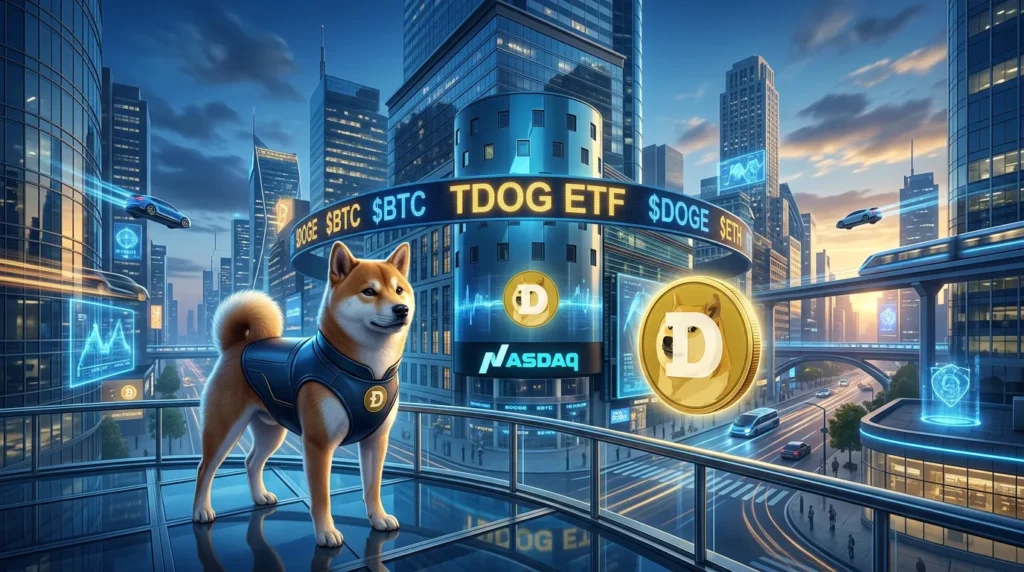
The most structurally significant development for Dogecoin’s long-term trajectory arrived in January 2026, when global crypto asset manager 21Shares launched the 21Shares Dogecoin ETF (ticker: TDOG) on the Nasdaq — becoming the first physically-backed spot Dogecoin ETF available to U.S. investors.
The launch was accompanied by a Nasdaq opening bell ceremony, with the House of Doge participating in what both parties described as a historic moment for the coin. Unlike futures-based products, TDOG is a physically backed ETF, meaning the fund holds actual DOGE as its underlying asset. This structure allows institutional investors, retirement accounts, and traditional brokerage clients to gain regulated exposure to Dogecoin without needing to create a crypto wallet, manage a seed phrase, or interact directly with a blockchain.
Why the TDOG ETF Matters Beyond the Price
The significance of the TDOG launch extends well beyond any short-term price impact. It represents a formal acknowledgment by the regulated financial system that Dogecoin — a coin launched as a joke in 2013 — has earned a place in mainstream investment infrastructure. Key implications include:
- Simplified access for institutional capital: Pension funds, hedge funds, and family offices that cannot hold crypto directly can now gain DOGE exposure through a familiar, regulated vehicle.
- Retirement account eligibility: In certain account structures, TDOG can be held within tax-advantaged retirement accounts — a first for Dogecoin exposure.
- Credibility signal: The listing follows the broader pattern established by Bitcoin and Ethereum ETFs, suggesting regulators and major financial platforms now view Dogecoin as a sufficiently mature asset for retail product structuring.
- Potential demand floor: Physical ETFs require the fund manager to acquire and hold actual DOGE as assets under management grow, creating a structured buy-side demand mechanism independent of retail sentiment cycles.
TDOG began trading at approximately $18–19 per share in early March 2026, reflecting the underlying DOGE market value. As with any ETF tracking a volatile underlying asset, the share price tracks DOGE’s market movements closely, amplified or dampened by fund flows and management fees.
The “Such” App: Building Real-World DOGE Utility From the Ground Up
While the ETF and X Money narratives dominate headlines, a quieter but potentially more consequential development is taking shape in Melbourne, Australia. House of Doge — the official corporate arm of the Dogecoin Foundation — is preparing to launch “Such,” a mobile payments application designed to make Dogecoin usable for everyday commerce by real people in real situations.
Such is scheduled for launch in the first half of 2026, developed by a team of approximately 20 engineers and product specialists. The app is built on open-source technology from the Dogecoin Foundation and combines several distinct features:
- Self-custodial DOGE wallet: Users retain full ownership of their private keys — no third-party custody, no exchange dependency. Funds are held by the user, not the platform.
- Buy, send, and receive functionality: Standard wallet capabilities for purchasing DOGE directly within the app and transacting with other users or merchants.
- Hustles — the merchant and freelancer tool: A built-in feature allowing small business owners, freelancers, artists, and independent service providers to list their offerings within the app and accept DOGE as payment directly from customers — bypassing traditional banking intermediaries and exchange processes entirely.
- Real-time transaction tracking: Transparent, on-chain transaction visibility for both sender and receiver.
According to Timothy Stebbing, CTO of House of Doge: “Many people already try to earn Dogecoin through side hustles, but the complicated setup makes them harder — Such is designed to solve that by removing the friction and making DOGE earnings easy.” CEO Marco Margiotta described the long-term vision as making Dogecoin “a widely used global decentralized currency.”
The Such app represents a philosophical commitment to Dogecoin’s original purpose — not as a speculative asset, but as a functional, peer-to-peer currency for everyday transactions. If adoption proves meaningful, it would provide a concrete utility foundation beneath the coin’s market value that goes beyond sentiment-driven price cycles.
Market Context: DOGE in March 2026
Against this backdrop of institutional and product development news, the DOGE market itself has been navigating a difficult period. The coin entered March 2026 following five consecutive months of declining value, with February 2026 alone seeing a drop of approximately 14%. Dogecoin currently trades significantly below its all-time high set in 2021 — a level the coin has not approached since.
Several structural factors continue to weigh on DOGE’s market performance:
- Continuous supply expansion: The protocol issues approximately 5 billion new DOGE per year with no cap and no halving mechanism. Without proportional demand growth, this constant supply increase creates persistent downward pressure on price.
- Bitcoin correlation: DOGE remains closely correlated with Bitcoin’s market cycles. In periods of broad crypto market weakness or risk-off sentiment, DOGE typically underperforms Bitcoin on the way down.
- Competition from utility tokens: Newer blockchain projects offering staking yields, governance participation, and smart contract functionality attract capital that might otherwise flow toward DOGE.
- Sentiment dependency: A significant portion of DOGE’s premium above its fundamental utility value has historically derived from high-profile endorsements and social media activity — a volatile and unreliable driver that can evaporate quickly.
The March 10 X Money announcement provided a brief but sharp relief rally, with DOGE gaining over 8% in a single session — demonstrating that sentiment-driven demand for the coin remains very much alive. Whether that momentum can be sustained will depend heavily on how the three major narratives — X Money, TDOG, and Such — develop over the coming months.
What to Watch: Key Catalysts Ahead for DOGE
For those tracking Dogecoin’s trajectory through the remainder of 2026, the following developments represent the most significant potential catalysts:
- X Money April launch details: Any official announcement regarding crypto or DOGE integration in X Money’s roadmap could be the single largest catalyst for DOGE in 2026. Conversely, a confirmed exclusion of crypto from X Money’s near-term feature set could represent a meaningful sentiment reset.
- Such app launch date confirmation: An official release date and early user reception for the House of Doge payment application will be closely watched as a test of whether DOGE can build sustained retail utility beyond speculative trading.
- TDOG ETF assets under management: As AUM data for TDOG becomes available, the scale of institutional demand entering via the ETF will provide concrete evidence of whether the listing has translated into meaningful new capital flows for the asset.
- Bitcoin market direction: Given DOGE’s strong historical correlation with BTC, any sustained Bitcoin bull run creates favorable conditions for DOGE recovery. Similarly, continued BTC weakness amplifies downward pressure across the altcoin market.
- Regulatory environment for crypto payments: Advancing U.S. and global frameworks for digital asset payments — particularly stablecoin legislation — will shape the competitive landscape in which both X Money and Such will need to operate.